
 |
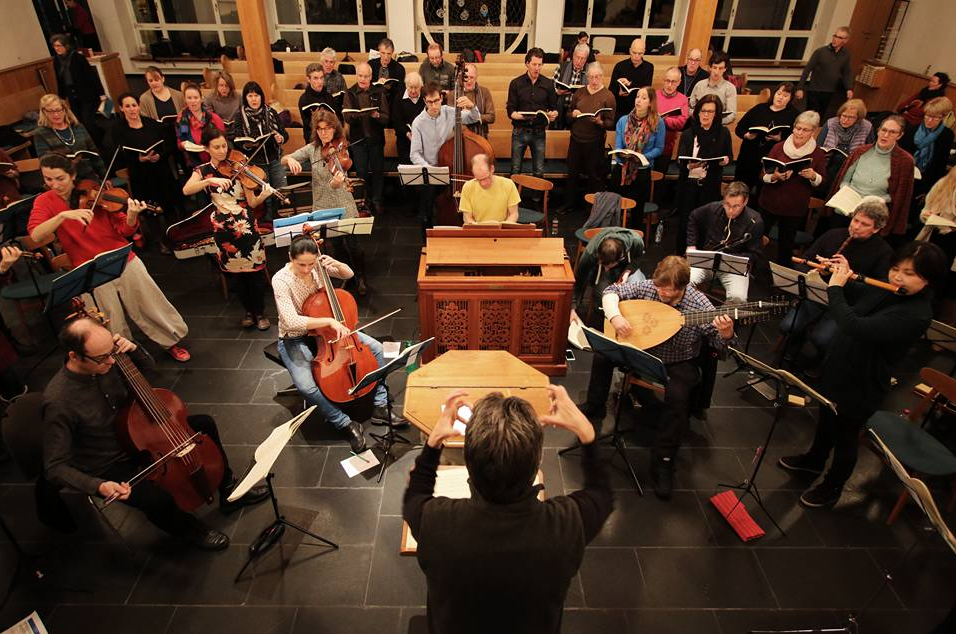
| Photo Credit: Bach Collegium Zürich |
Beginnings: the opening chorale
"Herr, unser Herrscher": the strings come climbing at you from a low octave, woodwinds darkening the atmosphere with a plaintive cry. The pulse is gentle and insistent. The first climax ('43) is full of mercy, climbing back down as gracefully as the ascent was anguished. Then comes the crescendo of first text: Lord, our master. It is proclaimed exclaimed, private and piercing. It feels fortissimo and sounds mezzo-forte. The strings and winds continue their ostinato thrust. 11 full minutes it takes for the ternary opening to announce that God is great, to evoke Christ's humiliation and lowliness, to announce anew that God is great.
The psychology of such music is hard to pin down; it is stupendously beautiful, affecting. It is grandly convinced of God's greatness, as bold a sound as anything intended to witness something magisterial. And the pain that accompanies it, borne of Christ's suffering, becomes our own pain, the people's pain, the choir's pain, as the choir plays the part of Christ's followers and indeed all humankind.
How can these two conflicting sentiments be mixed? Why is it that Bach's Pietism is so articulate, so lavish in showing the exquisite nature of joy amidst suffering? Why is joy itself true most when it is seated at the table of morbidity? I think of New Orleans and its jazz funerals, the dirges preceding the hymns, death before life, Mahler's "Sterben will ich, um zu leben". They make so much of our modern pleasure-joy appear hollow, unaccompanied as it mostly is by any rootedness in the yang of sadness.
